

×
Custom Height Direct Discharge Vibrating Sieve, Stainless Steel High Stand Straight Row Sifter for Production Line Connection
In the new energy and carbon materials industries, graphite powder, carbon powder, and anode material powders serve as core raw materials for producing battery anodes, conductive pastes, and high-purity carbon products. Modern powder production lines demand seamless, automated integration; ideally, screened material should discharge directly into bulk bags (FIBCs), storage silos, or onto conveyor belts. However, as production lines become increasingly integrated, the limitations of standard vibrating screens—specifically insufficient clearance beneath the unit and difficulties in connecting discharge points—have become increasingly apparent.Conventional vibrating screens often have limited leg height and cramped space underneath, restricting material collection to small containers. They cannot accommodate bulk bags or hoppers, nor can they interface directly with conveyor systems. This necessitates the construction of additional transfer platforms, driving up civil engineering and auxiliary costs, while also creating risks such as secondary dust generation and spillage during transfer, which can disrupt continuous production.
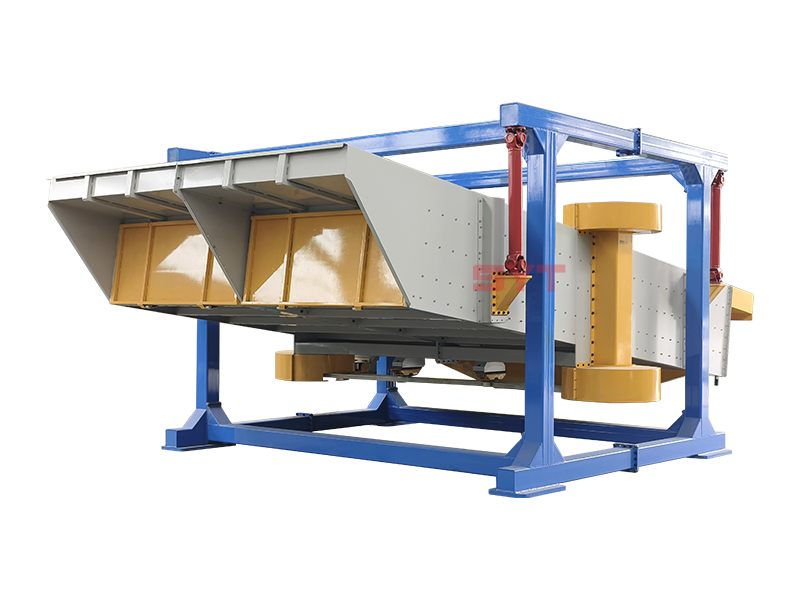
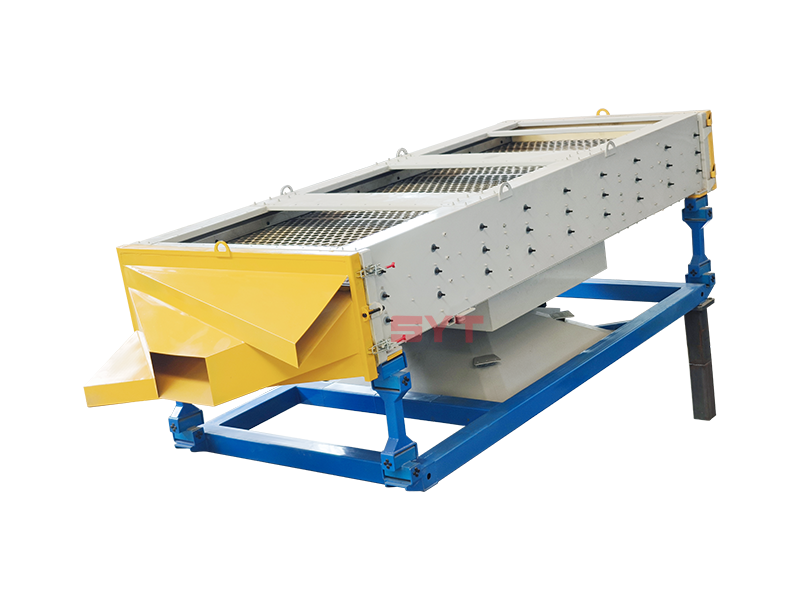
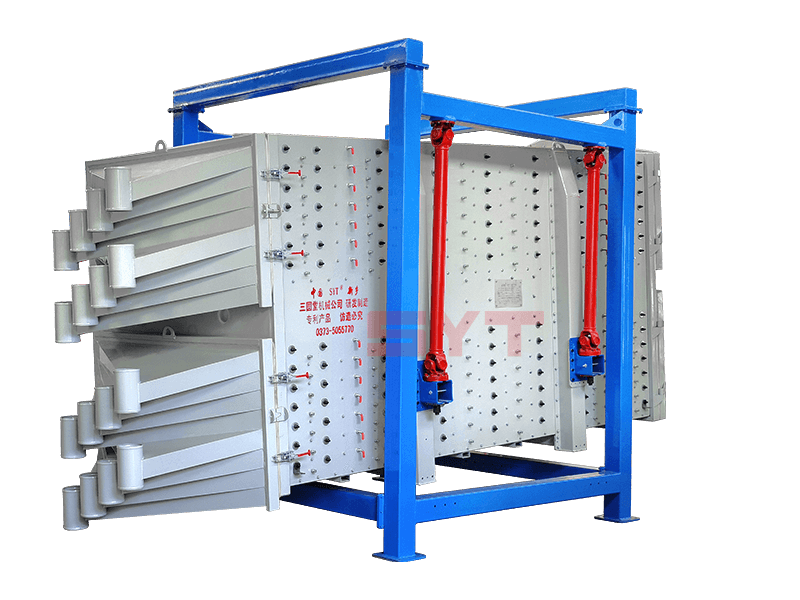
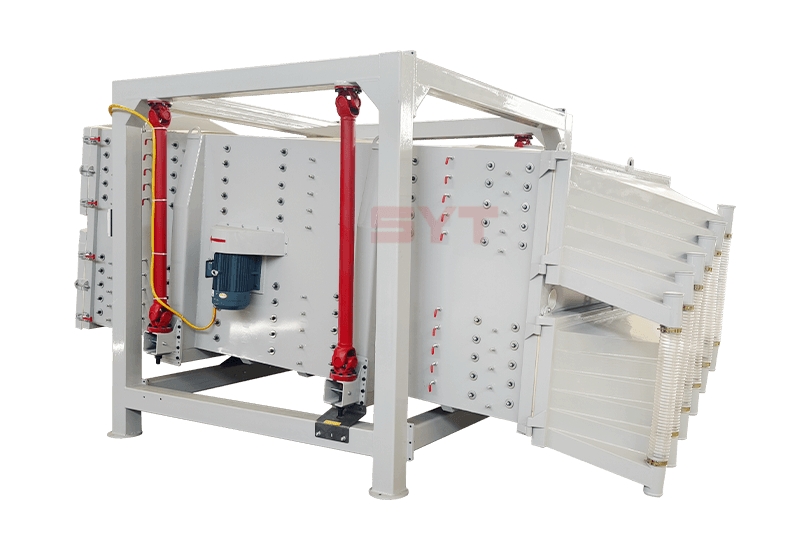
To address these integration challenges, we have developed an "Extended-Height Direct-Discharge Screen." Specifically designed for applications requiring significant clearance beneath the unit and direct material discharge, it is compatible with continuous production lines for graphite, carbon materials, chemicals, and food-grade powders.
1 Unique Advantages of the Extended-Height Direct-Discharge Screen
Extended frame design providing ample clearance for operations
The unit features extended legs or a raised frame structure, creating sufficient vertical clearance beneath the machine body. This allows for the direct placement of bulk bags, intermediate bulk containers (IBCs), or silos, as well as direct interfacing with belt or screw conveyors. There is no need for additional support structures or costly pit excavations; material discharges directly downward, eliminating intermediate transfer steps and simplifying the overall production line layout.
2 Direct discharge for high-volume, continuous output and increased capacity
Utilizing a direct-discharge structure, material flows rapidly from top to bottom. The short flow path and minimal material retention make it ideal for high-volume impurity removal and classification. Feeding, screening, and direct discharge occur in a seamless, continuous process suitable for 24-hour operations, effectively boosting the conveying efficiency of the entire line and minimizing material accumulation.
3 Optional fully enclosed design for dust control and purity assurance
A fully sealed, dust-proof structure can be configured to effectively suppress the airborne dispersion of ultrafine graphite powder, carbon powder, and similar materials, thereby minimizing dust pollution. The screening process prevents contamination from external impurities, safeguarding the purity of finished products such as anode materials and high-purity carbon powder, and meeting the clean-room production standards required by the new energy and carbon materials industries.
4 Robust structure, stable operation, and easy maintenance
The reinforced, elevated frame ensures the entire unit remains stable and vibration-free during high-speed operation. Screen replacement and cleaning are straightforward, minimizing downtime for maintenance. The equipment supports prolonged, continuous operation with a low failure rate, reducing long-term operational and maintenance costs for the enterprise.
5 Flexible customization for diverse powder screening applications
Key specifications—such as unit height, screen mesh size, number of screening decks, discharge outlet orientation, and material (carbon steel or 304 stainless steel)—can be customized to meet specific requirements. It is widely used for impurity removal and coarse/fine grading of materials such as graphite powder, carbon powder, anode materials, lithium battery powders, chemical powders, and food ingredients, and is suitable for integration into automated production lines.